

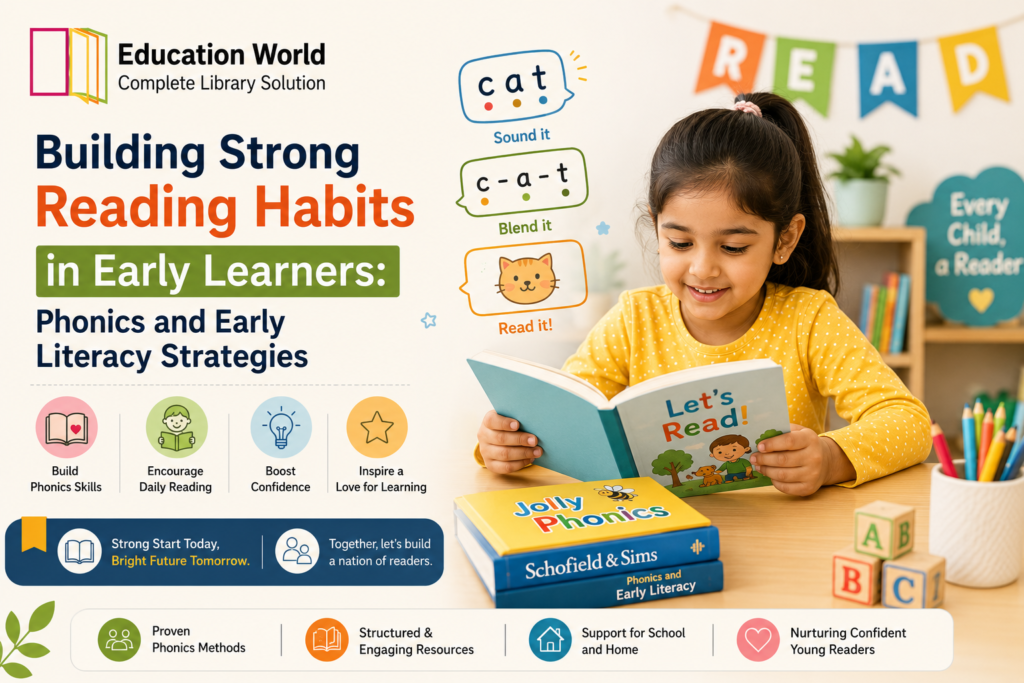
Developing strong reading habits in early learners is one of the most important steps in shaping lifelong learners. Early literacy is not just about recognizing letters—it involves building language skills, comprehension, and a love for reading from a young age. With the right strategies, tools, and guidance, parents and educators can create a powerful foundation for children’s academic success.
In this blog, we explore how phonics plays a crucial role in early literacy, effective strategies to build reading habits, and how trusted resources like Jolly Phonics and Schofield & Sims support schools worldwide.
What is Early Literacy and Why It Matters
Early literacy refers to the skills children develop before they learn to read and write formally. These include:
- Vocabulary development
- Listening and comprehension skills
- Phonemic awareness
- Print recognition
Research shows that strong early literacy skills lead to better academic outcomes and improved communication abilities later in life. A child who develops reading habits early is more likely to become a confident and independent learner.
Understanding Phonics: The Foundation of Reading
Phonics is a method of teaching reading by connecting sounds (phonemes) with letters or groups of letters (graphemes). It enables children to decode words by sounding them out.
For example:
- The word cat is broken into sounds: /c/ /a/ /t/
- Children blend these sounds to read the word
Phonics instruction focuses on key skills such as:
- Letter-sound recognition
- Blending sounds to form words
- Segmenting words for spelling
How Phonics Builds Strong Reading Habits
1. Improves Decoding Skills
Phonics teaches children how to break down unfamiliar words, making reading less intimidating and more accessible.
2. Enhances Reading Fluency
As children practice blending sounds, they begin to read more smoothly and confidently.
3. Supports Writing and Spelling
Understanding sounds helps children spell words accurately by identifying phonetic patterns.
4. Boosts Confidence
When children can read independently, they develop a sense of achievement that motivates further learning.
Effective Early Literacy Strategies for Young Learners
1. Use Multi-Sensory Learning Techniques
Children learn best when multiple senses are involved. Activities like:
- Singing phonics songs
- Using flashcards
- Writing letters in sand or air
- Storytelling with actions
Programs like Jolly Phonics incorporate songs, actions, and games to make learning interactive and memorable.
2. Encourage Daily Reading Habits
Consistency is key. Even 10–15 minutes of daily reading can:
- Improve vocabulary
- Strengthen comprehension
- Build a routine
Parents and teachers should create a reading-friendly environment with easy access to books—whether through libraries or the best online bookstore platforms that offer curated early learning materials.
3. Focus on Decodable Books
Decodable books are designed using phonics rules that children have already learned. This helps them:
- Practice reading independently
- Reinforce phonics skills
- Build confidence
4. Teach Blending and Segmenting Early
Blending (for reading) and segmenting (for writing) are essential skills. Children should learn:
- How to combine sounds to read words
- How to break words into sounds for spelling
5. Introduce “Tricky Words” Gradually
Not all English words follow phonetic rules. Words like was, said, or the need to be memorized.
Phonics programs teach these as “tricky words,” helping children recognize them without confusion.
6. Create a Print-Rich Environment
Surround children with text in everyday life:
- Labels on objects
- Storybooks
- Posters and charts
This constant exposure helps children connect spoken and written language naturally.
7. Engage Parents in the Learning Process
Parental involvement significantly boosts early literacy development. Parents can:
- Read aloud daily
- Practice phonics sounds at home
- Encourage storytelling
Using resources from trusted publishers like Schofield & Sims can provide structured support for both parents and educators.
Role of Trusted Educational Resources
Jolly Phonics
- Uses a synthetic phonics approach
- Teaches 42 letter sounds
- Incorporates multi-sensory learning (songs, actions, stories)
- Helps children read and write early
Schofield & Sims
- Provides structured phonics and literacy resources
- Aligns with curriculum standards
- Supports both classroom and home learning
Schools often rely on such programs because they are research-backed and designed for systematic learning.
Blending Phonics with a Rich Literacy Environment
While phonics is essential, it works best when combined with a broader literacy approach. Experts recommend integrating:
- Story reading
- Vocabulary building
- Speaking and listening activities
Phonics should not be taught in isolation but as part of a holistic learning experience that nurtures comprehension and creativity.
How to Choose the Right Learning Resources
When selecting materials for early learners, consider:
- Age-appropriate content
- Structured phonics progression
- Interactive and engaging formats
- Alignment with educational standards
Many educators and parents today rely on the best online bookstore platforms to access a wide range of phonics books, workbooks, and early learning kits in one place.
Conclusion
Building strong reading habits in early learners is a gradual but rewarding process. Phonics provides the essential foundation by helping children understand the relationship between sounds and letters, while engaging strategies ensure that learning remains enjoyable and effective.
By combining structured phonics instruction, daily reading practices, and high-quality resources like Jolly Phonics and Schofield & Sims, educators and parents can empower children to become confident readers.
Early literacy is not just about learning to read—it’s about opening doors to imagination, knowledge, and lifelong success.