Uncategorized

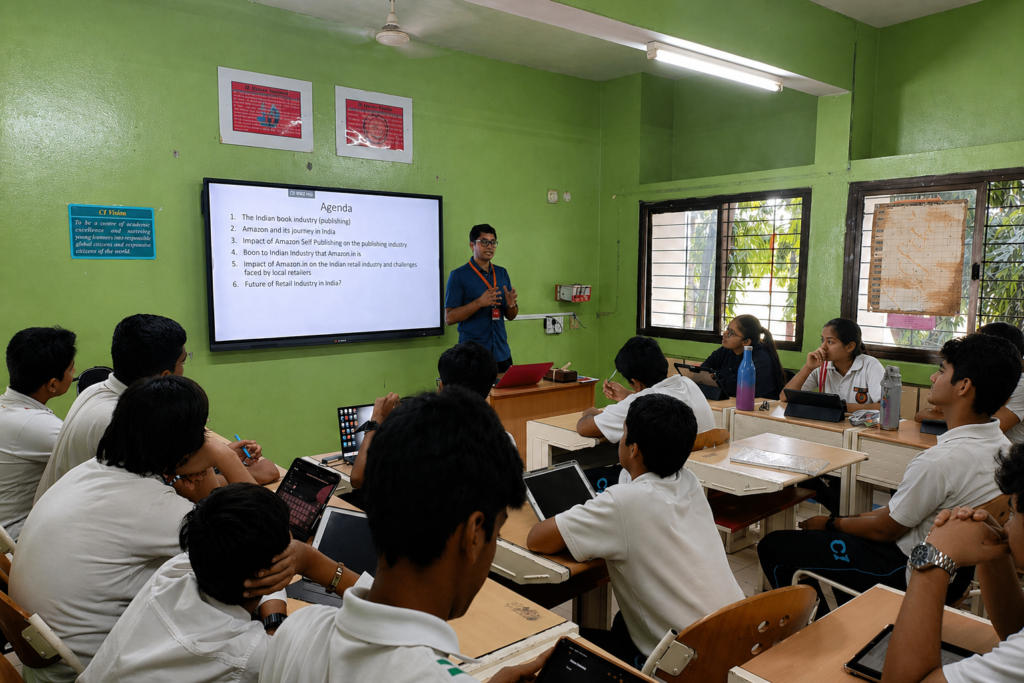
Insights from Mr. Akash Bhandari’s Guest Lecture at Choithram International School on India’s Publishing Industry

In an increasingly knowledge-driven world, the publishing industry plays a pivotal role in shaping how information is created, distributed, and consumed. A recent guest lecture by Mr. Akash Bhandari at Choithram International School offered students a valuable window into the evolving landscape of India’s publishing sector. The session, organized as part of the school’s commitment to experiential and real-world learning, provided both inspiration and practical insights for young learners.

Bridging Classroom Learning with Industry Realities

Choithram International School is known for integrating academic knowledge with real-world exposure, encouraging students to become critical thinkers and lifelong learners. The guest lecture by Mr. Akash Bhandari aligned perfectly with this philosophy, offering students an opportunity to understand how the publishing ecosystem functions beyond textbooks.

Mr. Bhandari began by highlighting the importance of publishing as the backbone of education. From school textbooks to competitive exam guides and digital learning resources, publishing ensures that knowledge reaches millions of learners across diverse geographies.

Understanding India’s Publishing Landscape

One of the key takeaways from the session was the sheer scale and diversity of India’s publishing industry. Mr. Bhandari explained that India is among the largest producers of books globally, with content spanning multiple languages, curricula, and formats. He emphasized that educational publishing remains a dominant segment, driven by the country’s vast student population and evolving academic needs.

Students learned about the lifecycle of a book—from content creation and editing to design, printing, and distribution. Mr. Bhandari stressed that publishing is not just about printing books; it is a collaborative process involving authors, editors, designers, marketers, and educators.

The Digital Shift in Publishing

A major highlight of the lecture was the discussion on digital transformation. Mr. Bhandari pointed out how e-books, online learning platforms, and interactive content are reshaping traditional publishing models. The rise of EdTech has accelerated the demand for digital-first content, making adaptability a key skill for future professionals in the industry.

He also noted that students today are both consumers and creators of content. With access to blogs, self-publishing platforms, and social media, young minds have unprecedented opportunities to share their ideas with a global audience.

Career Opportunities in Publishing

For students exploring career paths, the lecture opened up a wide spectrum of opportunities within the publishing industry. Mr. Bhandari discussed roles such as content writing, editing, graphic design, digital marketing, and product management. He encouraged students to develop strong communication skills, creativity, and a keen eye for detail—qualities essential for success in this field.

Importantly, he highlighted that publishing intersects with various domains, including education, technology, media, and business, making it a dynamic and evolving career choice.

Challenges and the Road Ahead

While the industry offers immense opportunities, Mr. Bhandari also addressed its challenges. Issues such as content quality, accessibility, affordability, and the digital divide continue to shape the sector. He urged students to think critically about how innovation can make learning resources more inclusive and impactful.

The session concluded with an interactive Q&A, during which students engaged enthusiastically, reflecting their curiosity and growing awareness of the industry.

Conclusion

The guest lecture by Mr. Akash Bhandari was more than just an informational session—it was an eye-opener for students at Choithram International School. By connecting classroom learning with industry insights, the lecture underscored the importance of staying informed, adaptable, and innovative in a rapidly changing world.

As India’s publishing industry continues to evolve, such interactions play a crucial role in preparing students to become not just consumers of knowledge but active contributors to its creation and dissemination.
Insights from Mr. Akash Bhandari’s Guest Lecture at Choithram International School on India’s Publishing Industry Read More »

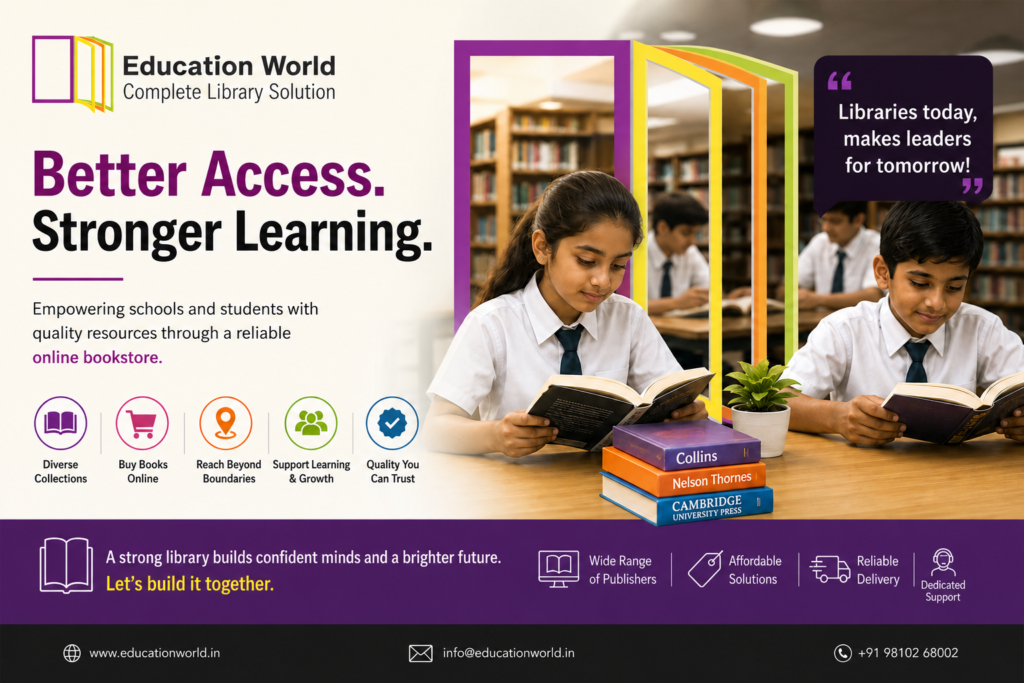
Libraries as Learning Hubs: Why Access Matters

Libraries have always been at the heart of education, acting as spaces where curiosity meets knowledge. In schools, libraries are more than just rooms filled with books—they are dynamic learning hubs that support academic growth, creativity, and independent thinking. In today’s evolving educational landscape, access to quality resources is more important than ever.

With the support of a reliable online bookstore, schools and students can now expand their library collections beyond physical limitations. The ability to buy books online has made it easier to ensure that learners have access to diverse and high-quality materials, no matter where they are.

At Education World, we believe that strong library access plays a key role in shaping confident and informed learners.

The Role of School Libraries in Modern Education

School libraries are essential for creating a strong academic foundation. They provide students with access to textbooks, reference materials, and supplementary reading that goes beyond classroom teaching.

A well-equipped library encourages students to explore topics independently. It helps them develop research skills, improve reading habits, and build critical thinking abilities. Libraries also create a quiet and focused environment where students can study, reflect, and grow intellectually.

In addition, libraries support teachers by offering resources that enhance lesson planning and classroom delivery. This makes them an integral part of the overall learning ecosystem.

Why Access to Quality Books Matters

Access to the right books can significantly impact a student’s learning journey. When students have a variety of resources available, they are better equipped to understand complex concepts and develop a deeper interest in their studies.

Limited access to books can restrict learning opportunities. This is where digital solutions play an important role. Through an online bookstore, schools can easily discover and order books that meet their curriculum needs.

The ability to buy books online ensures that even schools in remote areas can build strong library collections. It removes geographical barriers and provides equal learning opportunities for all students.

Libraries as Spaces for Exploration and Growth

Modern school libraries are evolving into interactive learning spaces. They are no longer limited to silent reading but have become centers for collaboration, discussion, and exploration.

Students use libraries to work on projects, explore new subjects, and engage in group learning activities. These experiences help develop communication skills, creativity, and confidence.

Libraries also encourage a love for reading beyond academics. When students have access to a wide range of books, including fiction and non-fiction, they are more likely to develop lifelong reading habits.

The Importance of Diverse Publishers in Library Collections

A strong library is built on diversity—not just in topics, but also in publishers. Different publishers bring unique perspectives, teaching styles, and content structures that enrich the learning experience.

For example, publishers like Collins are known for their structured and student-friendly content. Nelson Thornes offers resources that support curriculum-based learning, while Cambridge University Press provides globally recognized academic materials.

Including books from such publishers ensures that students are exposed to high-quality and well-researched content. It also allows educators to choose materials that best suit their teaching approach.

An online bookstore makes it easier to access books from multiple publishers in one place, helping schools build a balanced and comprehensive library.

How Online Bookstores Support School Libraries

Online bookstores have transformed the way schools build and manage their libraries. Instead of relying on local availability, schools can now access a wide range of books from different publishers and categories.

With a few clicks, administrators and educators can browse collections, compare options, and buy books online based on their requirements. This not only saves time but also ensures better decision-making.

Another advantage is affordability. Online platforms often provide competitive pricing and bulk purchase options, making it easier for schools to expand their collections within budget.

At Education World, we aim to support schools by offering a wide selection of academic and supplementary books. Our platform is designed to make the process simple, efficient, and reliable.

Building the Future Through Better Access

Access to knowledge is one of the most powerful tools for shaping the future. When students have the right resources, they are more confident, curious, and capable of achieving their goals.

School libraries play a crucial role in providing this access. By combining traditional library systems with digital solutions like an online bookstore, schools can create a more inclusive and effective learning environment.

The ability to buy books online ensures that no student is left behind due to a lack of resources. It empowers institutions to continuously update their collections and meet the changing needs of education.

Conclusion

Libraries are no longer just storage spaces for books—they are vibrant learning hubs that inspire growth, creativity, and knowledge. Ensuring access to quality resources is essential for building strong educational foundations.

With the support of an online bookstore, schools can overcome limitations and provide students with diverse and valuable learning materials. The option to buy books online makes it easier than ever to build rich and inclusive library collections.

At Education World, we are committed to supporting education by connecting schools with the resources they need. Because when access improves, learning transforms—and the impact lasts a lifetime.

Libraries as Learning Hubs: Why Access Matters Read More »

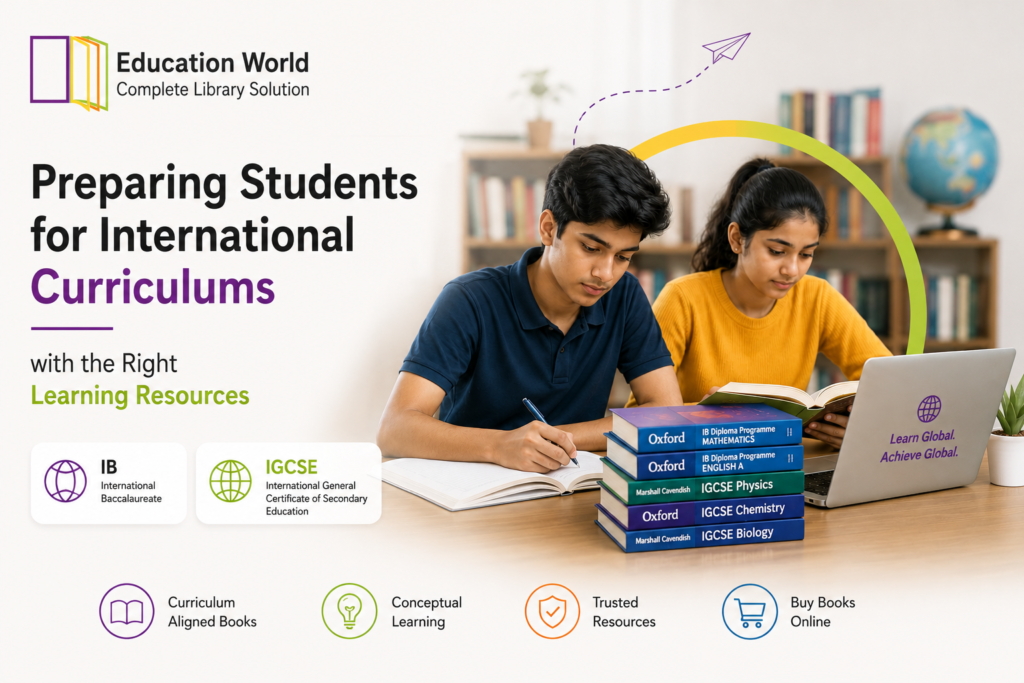
Preparing Students for International Curriculums with the Right Learning Resources

In today’s global education landscape, international curriculums like IB (International Baccalaureate) and IGCSE (International General Certificate of Secondary Education) are becoming increasingly popular. These programs focus on conceptual learning, critical thinking, and global awareness. However, preparing for them requires the right strategy, guidance, and access to high-quality study materials.

An online bookstore plays a crucial role in helping students and parents find the right academic resources. With carefully selected books from trusted publishers, students can build a strong foundation and confidently approach these challenging curricula. At Education World, we make it easier to buy books online that are specifically designed for IB and IGCSE learners.

Understanding IB and IGCSE Learning Requirements

IB and IGCSE curriculums differ from traditional education systems in many ways. Instead of focusing only on memorization, they emphasize understanding concepts, applying knowledge, and developing analytical skills.

Students are expected to engage in independent research, project-based learning, and structured assessments. Subjects are taught with a global perspective, encouraging learners to think critically and connect ideas across disciplines.

Because of this approach, having the right study materials becomes essential. Books designed specifically for these curriculums help students understand concepts clearly and prepare effectively for exams.

Importance of Choosing the Right Books

Selecting the right books is one of the most important steps in preparing for IB and IGCSE. High-quality textbooks not only explain concepts but also provide practice questions, case studies, and real-world examples.

Publishers like Oxford University Press and Marshall Cavendish Education are widely recognized for their curriculum-aligned content. Their books are structured to match the syllabus and include detailed explanations that support both classroom learning and self-study.

When students use reliable resources, they gain clarity, improve their understanding, and build confidence in their preparation.

Effective Strategies for IB and IGCSE Readiness

Preparing for international curriculums requires more than just reading textbooks. Here are some proven strategies that can help students succeed:

1. Focus on Conceptual Understanding

Instead of memorizing answers, students should focus on understanding the “why” behind each topic. This helps in solving application-based questions that are common in IB and IGCSE exams.

2. Practice Regularly

Consistent practice is key. Solving past papers and sample questions helps students become familiar with exam patterns and improve time management.

3. Use Multiple Learning Resources

Combining textbooks with additional reference materials enhances learning. An online bookstore offers access to a wide range of supplementary books that can strengthen subject knowledge.

4. Develop Strong Study Habits

Creating a study schedule, setting goals, and revising regularly can significantly improve performance. Discipline and consistency are essential for success in these curriculums.

5. Seek Guidance When Needed

Teachers, mentors, and online resources can provide valuable support. Students should not hesitate to ask questions and clarify doubts.

Benefits of Using an Online Bookstore for Academic Preparation

An online bookstore makes it easier for students and parents to access the right study materials without spending time searching in multiple places.

One of the biggest advantages is convenience. You can explore a wide range of IB and IGCSE books from the comfort of your home and compare different options before making a decision.

Another benefit is availability. Books from trusted publishers are easily accessible, ensuring that students get the exact resources recommended for their curriculum.

Additionally, it is simple to buy books online and have them delivered directly to your doorstep. This saves time and ensures that students can focus more on their studies rather than worrying about finding the right materials.

Why Choose Education World for IB and IGCSE Books

Education World is committed to supporting students with high-quality academic resources. Our platform offers a carefully curated selection of books tailored to international curriculums.

We provide access to trusted publishers, ensuring that students receive accurate and up-to-date content. Our user-friendly interface makes it easy to browse categories, compare books, and find the right study materials quickly.

Affordability is another key focus. We aim to make quality education accessible by offering competitive pricing on all our books.

With reliable delivery and customer support, Education World ensures a smooth experience for every user looking to buy books online for IB and IGCSE preparation.

Conclusion

Preparing for IB and IGCSE requires the right combination of strategy, dedication, and quality resources. By focusing on conceptual learning, practicing regularly, and using trusted books, students can build a strong foundation for success.

An online bookstore simplifies the process of finding the right study materials, making it easier for students to stay on track. Education World is dedicated to helping learners access the best resources and achieve their academic goals.

Start your preparation today with the right books and take a confident step toward success in international education.

Preparing Students for International Curriculums with the Right Learning Resources Read More »

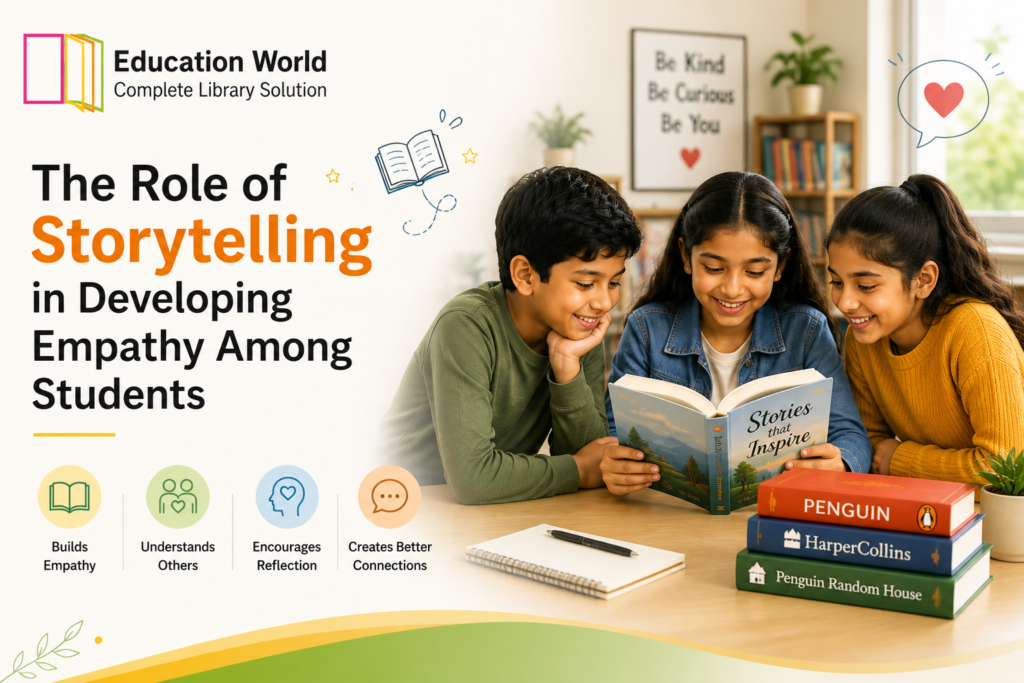
The Role of Storytelling in Developing Empathy Among Students

In today’s fast-paced, digitally driven world, developing empathy among students has become more important than ever. While academic knowledge builds intellect, it is emotional intelligence that shapes compassionate, socially aware individuals. One of the most powerful tools educators can use to nurture empathy is storytelling—especially through literature.

From classroom reading sessions to curated school book lists by publishers like Penguin Random House and HarperCollins, storytelling plays a transformative role in shaping how students perceive the world and understand others.

Why Empathy Matters in Education

Empathy is the ability to understand and share the feelings of others. It is a critical component of emotional intelligence and directly impacts how students interact, communicate, and build relationships.

Research shows that empathy is linked to improved social behavior, better conflict resolution, and stronger academic collaboration. Storytelling acts as a bridge that connects students to experiences beyond their own lives. Studies indicate that engaging with narratives can significantly enhance empathy and prosocial behavior by immersing individuals in different perspectives.

In classrooms, empathy helps create a positive learning environment where students feel heard, respected, and valued.

The Power of Storytelling in Shaping Emotional Intelligence

Storytelling is more than just entertainment—it is a cognitive and emotional experience. When students read or listen to stories, they mentally simulate the experiences of characters.

Narrative Transportation and Emotional Engagement

The concept of “narrative transportation” explains how readers become emotionally involved in stories. When students are absorbed in a narrative, they begin to feel what characters feel, which strengthens empathy.

Research highlights that storytelling fosters attentive listening, reflection, and emotional understanding—key elements of empathy development.

Learning Through Perspective-Taking

Stories expose students to diverse perspectives—different cultures, struggles, and viewpoints. This exposure helps them step outside their own experiences and understand others more deeply.

Literature acts as both a mirror and a window:

  • A mirror reflects students’ own experiences
  • A window introduces them to unfamiliar worlds

This dual function plays a crucial role in building emotional intelligence.

How Literature Builds Empathy in Students

Books are one of the most accessible and effective storytelling tools in education. Carefully selected literature can significantly influence students’ emotional growth.

Character Identification and Emotional Connection

When students connect with characters, they begin to share their emotions—joy, fear, sadness, and hope. This emotional bonding helps students understand complex human feelings.

Children’s storybooks, for instance, are designed to encourage empathy by presenting relatable situations and emotional challenges.

Exposure to Real-Life Situations

Literature often presents real-world issues such as inequality, friendship, loss, and resilience. By reading these stories, students learn how different individuals respond to challenges.

This prepares them to respond empathetically in real-life situations.

Encouraging Reflection and Discussion

Stories naturally invite discussion. Classroom conversations about characters’ decisions and emotions help students reflect on their own beliefs and behaviors.

This reflective process strengthens both empathy and critical thinking skills.

Popular School Literature from Leading Publishers

Many schools rely on globally recognized publishers like Penguin Random House and HarperCollins to curate reading materials that promote empathy and emotional intelligence.

These publishers offer a wide range of titles often included in school curricula, such as:

  • “Wonder” by R.J. Palacio (Penguin) – Teaches kindness and acceptance
  • “The Alchemist” by Paulo Coelho (HarperCollins) – Explores purpose and self-discovery
  • “Matilda” by Roald Dahl (Penguin) – Highlights resilience and justice
  • “The Boy in the Striped Pyjamas” by John Boyne (Penguin) – Builds historical empathy

Such books are carefully selected because they resonate emotionally with students and encourage them to think beyond themselves.

For parents and educators looking to buy books online in India, these publishers provide reliable, high-quality options that align with educational goals.

The Role of Teachers in Storytelling

Teachers play a crucial role in maximizing the impact of storytelling in classrooms.

Creating an Interactive Reading Environment

Instead of passive reading, teachers can:

  • Ask open-ended questions
  • Encourage role-playing
  • Use storytelling sessions

These methods help students engage more deeply with the narrative.

Connecting Stories to Real Life

Teachers can guide students to relate stories to their own experiences. For example:

  • “How would you feel in this situation?”
  • “What would you do differently?”

Such questions encourage emotional reflection and empathy.

Integrating Diverse Literature

Including stories from different cultures and backgrounds ensures that students develop a broader worldview.

Diverse storytelling helps break stereotypes and fosters inclusivity.

Storytelling Beyond Books

While books remain central, storytelling extends beyond traditional literature.

Digital Story telling

Audiobooks, podcasts, and animated stories provide new ways for students to engage with narratives.

Oral Storytelling and Classroom Activities

Storytelling sessions, debates, and dramatizations allow students to actively participate and express emotions.

Studies show that storytelling—whether written or oral—can significantly improve empathy levels across different age groups.

Long-Term Impact of Storytelling on Students

The benefits of storytelling go far beyond the classroom.

Students who regularly engage with literature tend to:

  • Develop stronger emotional intelligence
  • Show greater compassion and kindness
  • Build better interpersonal relationships
  • Exhibit improved communication skills

Empathy developed through storytelling also contributes to responsible citizenship and ethical decision-making.

Conclusion

Storytelling is not just a teaching method—it is a powerful tool for shaping emotionally intelligent individuals. Through literature, students learn to understand different perspectives, connect with others, and navigate complex emotions.

Publishers like Penguin Random House and HarperCollins continue to play a vital role in providing meaningful stories that schools trust and recommend.As education evolves, integrating storytelling into learning is no longer optional—it is essential. Whether through classroom reading or choosing to buy books online in India, investing in the right literature can make a lasting impact on students’ emotional and social development.

The Role of Storytelling in Developing Empathy Among Students Read More »

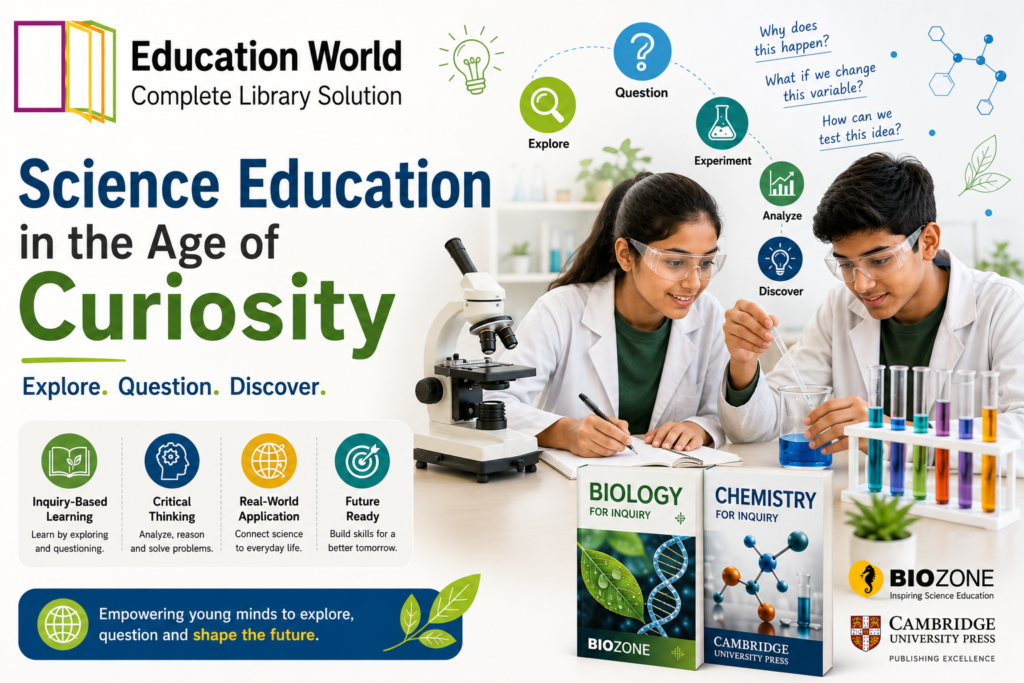
Science Education in the Age of Curiosity

In today’s rapidly evolving world, science education is no longer confined to memorizing formulas or definitions. Instead, it is shifting toward a curiosity-driven approach where students actively explore, question, and experiment. Inquiry-based learning (IBL) has emerged as a powerful method in biology and chemistry classrooms, transforming students from passive learners into active investigators.

This transformation is also reflected in modern educational resources, including Bestseller Books published by organizations like Biozone and Cambridge University Press, which emphasize exploration, critical thinking, and real-world application.

What is Inquiry-Based Learning?

Inquiry-based learning is a student-centered teaching method that encourages learners to ask questions, investigate problems, and construct their own understanding of scientific concepts. Unlike traditional lecture-based methods, IBL focuses on the process of discovery rather than simply delivering answers.

In this model, students:

  • Formulate questions
  • Design experiments
  • Analyze results
  • Draw conclusions based on evidence

Research shows that inquiry-based approaches allow students to engage in authentic scientific practices and develop a deeper understanding of concepts.

Why Curiosity Matters in Science Education

Curiosity is the driving force behind scientific discovery. From understanding cellular processes in biology to exploring chemical reactions in laboratories, curiosity fuels innovation.

Inquiry-based learning aligns perfectly with this natural human instinct. Instead of asking “What is the answer?”, students begin to ask:

  • “Why does this happen?”
  • “What if we change this variable?”
  • “How can we test this idea?”

Studies indicate that such approaches significantly improve student motivation, engagement, and conceptual understanding.

Inquiry-Based Learning in Biology

From Observation to Discovery

Biology, as a life science, is inherently suited for inquiry-based learning. Students can observe living organisms, conduct experiments, and analyze biological systems.

For example:

  • Investigating plant growth under different conditions
  • Studying microbial cultures
  • Exploring genetics through simulations

Inquiry-based biology labs help students develop scientific attitudes and confidence, moving them toward expert-like thinking.

Real-World Application

Instead of memorizing diagrams of cells or ecosystems, students engage in real-world problems such as:

  • Environmental conservation
  • Disease prevention
  • Biodiversity analysis

This approach not only enhances understanding but also connects science to everyday life.

Role of Modern Publishers

Educational publishers like Biozone are known for creating biology resources that promote inquiry. Their materials often include:

  • Case-based questions
  • Data analysis tasks
  • Hands-on investigation activities

Such Bestseller Books encourage students to think like biologists rather than just study biology.

Inquiry-Based Learning in Chemistry

Beyond “Cookbook” Experiments

Traditional chemistry labs often follow step-by-step instructions, leaving little room for exploration. Inquiry-based chemistry, however, shifts the focus toward experimentation and problem-solving.

Students might:

  • Design their own experiments
  • Predict outcomes of reactions
  • Analyze unexpected results

This approach helps students understand chemistry as a process of discovery rather than a set of fixed rules.

Research highlights that inquiry-driven laboratory work promotes critical thinking, reasoning, and independent learning.

Developing Scientific Thinking

Inquiry-based chemistry allows students to:

  • Understand experimental design
  • Recognize variables and controls
  • Interpret data effectively

Students often report feeling like “real scientists,” as they actively generate knowledge rather than passively receive it.

Contribution of Educational Resources

Publishers such as Cambridge University Press have developed chemistry textbooks that integrate inquiry-based tasks, including:

  • Open-ended questions
  • Problem-solving exercises
  • Real-world case studies

These resources support teachers in implementing inquiry-based strategies effectively in classrooms.

Benefits of Inquiry-Based Learning

Inquiry-based learning offers several advantages in science education:

1. Enhanced Engagement

Students become active participants, leading to higher interest and motivation.

2. Improved Critical Thinking

Learners analyze, evaluate, and synthesize information rather than memorizing facts.

3. Deeper Conceptual Understanding

By exploring concepts themselves, students retain knowledge longer and understand it more deeply.

4. Development of Scientific Skills

Students learn essential skills such as:

  • Hypothesis formation
  • Data analysis
  • Problem-solving

Challenges in Implementation

While inquiry-based learning is highly effective, it is not without challenges:

  • Requires more time than traditional teaching methods
  • Demands well-trained educators
  • Needs proper classroom resources

Additionally, students may initially struggle without structured guidance, highlighting the importance of a balanced approach.

The Future of Science Education

As education continues to evolve, inquiry-based learning will play a central role in shaping future scientists. The integration of technology, digital labs, and interactive resources will further enhance this approach.

Publishers like Biozone and Cambridge University Press are already leading this transformation by creating innovative learning materials that align with modern pedagogical practices.

These Bestseller Books are not just textbooks—they are tools that inspire curiosity, foster exploration, and prepare students for real-world scientific challenges.

Conclusion

Science education in the age of curiosity is about more than just acquiring knowledge—it is about developing the ability to question, explore, and innovate. Inquiry-based learning in biology and chemistry empowers students to think critically, engage deeply, and act like scientists.

By embracing this approach and utilizing high-quality resources from leading publishers, educators can create classrooms where curiosity thrives and learning becomes a journey of discovery.

Science Education in the Age of Curiosity Read More »

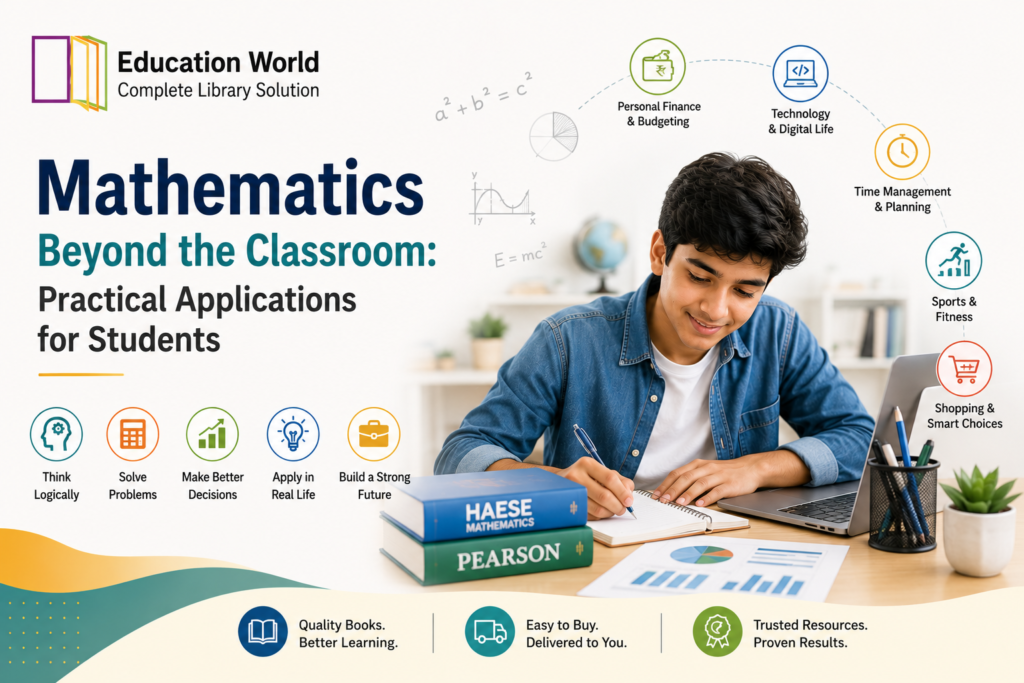
Mathematics Beyond the Classroom: Practical Applications for Students

Mathematics is often seen as a subject confined to textbooks and classrooms, but in reality, it is one of the most powerful tools students carry into the real world. From managing personal finances to understanding technology, math plays a crucial role in everyday life. When students begin to see these real-world connections, mathematics transforms from abstract theory into a meaningful and practical skill.

In this blog, we explore how math extends beyond the classroom and how structured learning resources—such as those offered by Haese Mathematics and Pearson—help students bridge the gap between theory and real-life application.

Why Mathematics Matters Beyond School

Mathematics is not just about solving equations or passing exams. It develops logical thinking, problem-solving abilities, and analytical skills that are essential in both personal and professional life.

Key Benefits of Practical Mathematics

  • Enhances decision-making skills
  • Improves financial literacy
  • Strengthens problem-solving abilities
  • Builds critical thinking
  • Supports career readiness

Everyday Applications of Mathematics

Personal Finance and Budgeting

One of the most immediate applications of math is managing money. Students use arithmetic and percentages to create budgets, calculate savings, and understand interest rates, loans, and EMIs.

Technology and Digital Life

Mathematics is the backbone of modern technology. Algorithms, encryption, and even mobile apps rely heavily on mathematical logic, making it an essential skill for the digital age.

Time Management and Planning

Students use math to organize schedules, estimate time, and balance tasks efficiently. These skills become crucial in both academic and professional life.

Sports and Fitness

From calculating averages to measuring speed and performance, math plays a big role in sports. Even angles and trajectories are important in games like cricket and football.

Shopping and Consumer Awareness

Mathematics helps students make smarter purchasing decisions. While shopping online, especially when they buy books online in India, they use math to compare prices, evaluate discounts, and understand value for money.

Mathematics in Career Paths

Mathematics is essential across various industries, not just traditional fields.

STEM Careers

  • Engineering
  • Data Science
  • Artificial Intelligence
  • Architecture

Business and Economics

  • Financial analysis
  • Marketing analytics
  • Investment planning

Creative Fields

  • Graphic design
  • Music
  • Animation

Role of Structured Learning Resources

Understanding math deeply requires the right learning materials.

How Quality Resources Help

  • Simplify complex concepts
  • Provide real-life examples
  • Encourage logical thinking
  • Offer practice for mastery

Publishers like Haese Mathematics focus on conceptual clarity, while Pearson integrates theory with practical examples, helping students apply mathematics effectively.

Bridging the Gap Between Theory and Practice

Apply Concepts to Daily Life

Students should use math in everyday activities like budgeting, measuring, and planning.

Use Real-Life Examples

Examples such as shopping discounts, travel time, and cooking measurements make math more relatable.

Practice Regularly

Consistent practice using structured resources strengthens understanding and builds confidence.

The Role of Digital Learning

Digital platforms have made learning mathematics more interactive and accessible.

Advantages of Online Learning

  • Flexible learning pace
  • Interactive tools
  • Access to diverse resources
  • Better concept visualization

Students today often buy books online in India to conveniently access trusted materials and enhance their learning experience.

Building Mathematical Confidence

Tips to Improve

  • Start with basics
  • Practice consistently
  • Focus on understanding
  • Relate concepts to real life

Confidence in mathematics grows when students realize its importance beyond exams.

Conclusion

Mathematics is far more than a classroom subject—it is a life skill that empowers students in every aspect of life. From managing finances to understanding technology, math is deeply connected to the real world.

With the support of structured resources from Haese Mathematics and Pearson, students can build strong foundations and apply their knowledge practically.

When students begin to see math as a real-world tool rather than just a subject, they unlock its true value for lifelong success.

Mathematics Beyond the Classroom: Practical Applications for Students Read More »

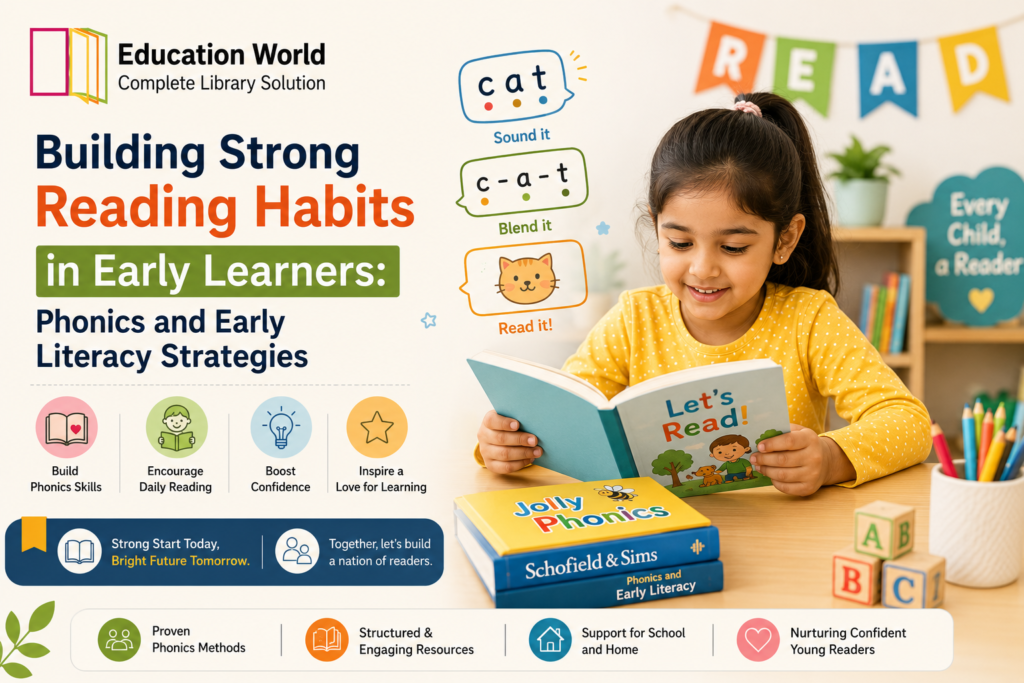
 Building Strong Reading Habits in Early Learners: Phonics and Early Literacy Strategies

Developing strong reading habits in early learners is one of the most important steps in shaping lifelong learners. Early literacy is not just about recognizing letters—it involves building language skills, comprehension, and a love for reading from a young age. With the right strategies, tools, and guidance, parents and educators can create a powerful foundation for children’s academic success.

In this blog, we explore how phonics plays a crucial role in early literacy, effective strategies to build reading habits, and how trusted resources like Jolly Phonics and Schofield & Sims support schools worldwide.

What is Early Literacy and Why It Matters

Early literacy refers to the skills children develop before they learn to read and write formally. These include:

  • Vocabulary development
  • Listening and comprehension skills
  • Phonemic awareness
  • Print recognition

Research shows that strong early literacy skills lead to better academic outcomes and improved communication abilities later in life. A child who develops reading habits early is more likely to become a confident and independent learner.

Understanding Phonics: The Foundation of Reading

Phonics is a method of teaching reading by connecting sounds (phonemes) with letters or groups of letters (graphemes). It enables children to decode words by sounding them out.

For example:

  • The word cat is broken into sounds: /c/ /a/ /t/
  • Children blend these sounds to read the word

Phonics instruction focuses on key skills such as:

  • Letter-sound recognition
  • Blending sounds to form words
  • Segmenting words for spelling

How Phonics Builds Strong Reading Habits

1. Improves Decoding Skills

Phonics teaches children how to break down unfamiliar words, making reading less intimidating and more accessible.

2. Enhances Reading Fluency

As children practice blending sounds, they begin to read more smoothly and confidently.

3. Supports Writing and Spelling

Understanding sounds helps children spell words accurately by identifying phonetic patterns.

4. Boosts Confidence

When children can read independently, they develop a sense of achievement that motivates further learning.

Effective Early Literacy Strategies for Young Learners

1. Use Multi-Sensory Learning Techniques

Children learn best when multiple senses are involved. Activities like:

  • Singing phonics songs
  • Using flashcards
  • Writing letters in sand or air
  • Storytelling with actions

Programs like Jolly Phonics incorporate songs, actions, and games to make learning interactive and memorable.

2. Encourage Daily Reading Habits

Consistency is key. Even 10–15 minutes of daily reading can:

  • Improve vocabulary
  • Strengthen comprehension
  • Build a routine

Parents and teachers should create a reading-friendly environment with easy access to books—whether through libraries or the best online bookstore platforms that offer curated early learning materials.

3. Focus on Decodable Books

Decodable books are designed using phonics rules that children have already learned. This helps them:

  • Practice reading independently
  • Reinforce phonics skills
  • Build confidence

4. Teach Blending and Segmenting Early

Blending (for reading) and segmenting (for writing) are essential skills. Children should learn:

  • How to combine sounds to read words
  • How to break words into sounds for spelling

5. Introduce “Tricky Words” Gradually

Not all English words follow phonetic rules. Words like was, said, or the need to be memorized.

Phonics programs teach these as “tricky words,” helping children recognize them without confusion.

6. Create a Print-Rich Environment

Surround children with text in everyday life:

  • Labels on objects
  • Storybooks
  • Posters and charts

This constant exposure helps children connect spoken and written language naturally.

7. Engage Parents in the Learning Process

Parental involvement significantly boosts early literacy development. Parents can:

  • Read aloud daily
  • Practice phonics sounds at home
  • Encourage storytelling

Using resources from trusted publishers like Schofield & Sims can provide structured support for both parents and educators.

Role of Trusted Educational Resources

Jolly Phonics

  • Uses a synthetic phonics approach
  • Teaches 42 letter sounds
  • Incorporates multi-sensory learning (songs, actions, stories)
  • Helps children read and write early

Schofield & Sims

  • Provides structured phonics and literacy resources
  • Aligns with curriculum standards
  • Supports both classroom and home learning

Schools often rely on such programs because they are research-backed and designed for systematic learning.

Blending Phonics with a Rich Literacy Environment

While phonics is essential, it works best when combined with a broader literacy approach. Experts recommend integrating:

  • Story reading
  • Vocabulary building
  • Speaking and listening activities

Phonics should not be taught in isolation but as part of a holistic learning experience that nurtures comprehension and creativity.

How to Choose the Right Learning Resources

When selecting materials for early learners, consider:

  • Age-appropriate content
  • Structured phonics progression
  • Interactive and engaging formats
  • Alignment with educational standards

Many educators and parents today rely on the best online bookstore platforms to access a wide range of phonics books, workbooks, and early learning kits in one place.

Conclusion

Building strong reading habits in early learners is a gradual but rewarding process. Phonics provides the essential foundation by helping children understand the relationship between sounds and letters, while engaging strategies ensure that learning remains enjoyable and effective.

By combining structured phonics instruction, daily reading practices, and high-quality resources like Jolly Phonics and Schofield & Sims, educators and parents can empower children to become confident readers.

Early literacy is not just about learning to read—it’s about opening doors to imagination, knowledge, and lifelong success.

 Building Strong Reading Habits in Early Learners: Phonics and Early Literacy Strategies Read More »