

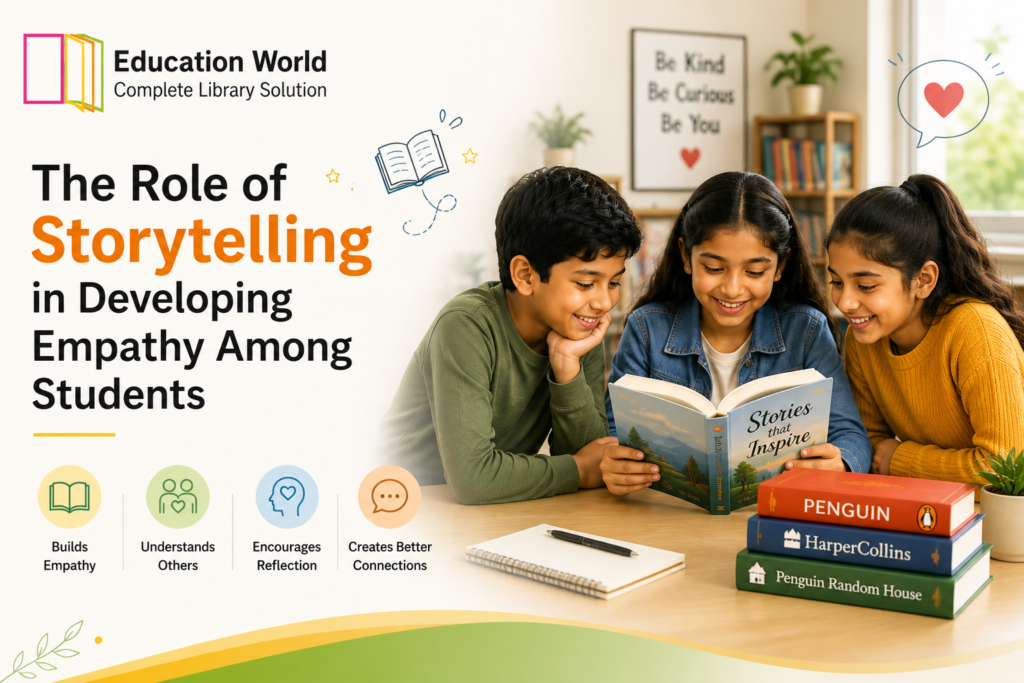
In today’s fast-paced, digitally driven world, developing empathy among students has become more important than ever. While academic knowledge builds intellect, it is emotional intelligence that shapes compassionate, socially aware individuals. One of the most powerful tools educators can use to nurture empathy is storytelling—especially through literature.
From classroom reading sessions to curated school book lists by publishers like Penguin Random House and HarperCollins, storytelling plays a transformative role in shaping how students perceive the world and understand others.
Why Empathy Matters in Education
Empathy is the ability to understand and share the feelings of others. It is a critical component of emotional intelligence and directly impacts how students interact, communicate, and build relationships.
Research shows that empathy is linked to improved social behavior, better conflict resolution, and stronger academic collaboration. Storytelling acts as a bridge that connects students to experiences beyond their own lives. Studies indicate that engaging with narratives can significantly enhance empathy and prosocial behavior by immersing individuals in different perspectives.
In classrooms, empathy helps create a positive learning environment where students feel heard, respected, and valued.
The Power of Storytelling in Shaping Emotional Intelligence
Storytelling is more than just entertainment—it is a cognitive and emotional experience. When students read or listen to stories, they mentally simulate the experiences of characters.
Narrative Transportation and Emotional Engagement
The concept of “narrative transportation” explains how readers become emotionally involved in stories. When students are absorbed in a narrative, they begin to feel what characters feel, which strengthens empathy.
Research highlights that storytelling fosters attentive listening, reflection, and emotional understanding—key elements of empathy development.
Learning Through Perspective-Taking
Stories expose students to diverse perspectives—different cultures, struggles, and viewpoints. This exposure helps them step outside their own experiences and understand others more deeply.
Literature acts as both a mirror and a window:
- A mirror reflects students’ own experiences
- A window introduces them to unfamiliar worlds
This dual function plays a crucial role in building emotional intelligence.
How Literature Builds Empathy in Students
Books are one of the most accessible and effective storytelling tools in education. Carefully selected literature can significantly influence students’ emotional growth.
Character Identification and Emotional Connection
When students connect with characters, they begin to share their emotions—joy, fear, sadness, and hope. This emotional bonding helps students understand complex human feelings.
Children’s storybooks, for instance, are designed to encourage empathy by presenting relatable situations and emotional challenges.
Exposure to Real-Life Situations
Literature often presents real-world issues such as inequality, friendship, loss, and resilience. By reading these stories, students learn how different individuals respond to challenges.
This prepares them to respond empathetically in real-life situations.
Encouraging Reflection and Discussion
Stories naturally invite discussion. Classroom conversations about characters’ decisions and emotions help students reflect on their own beliefs and behaviors.
This reflective process strengthens both empathy and critical thinking skills.
Popular School Literature from Leading Publishers
Many schools rely on globally recognized publishers like Penguin Random House and HarperCollins to curate reading materials that promote empathy and emotional intelligence.
These publishers offer a wide range of titles often included in school curricula, such as:
- “Wonder” by R.J. Palacio (Penguin) – Teaches kindness and acceptance
- “The Alchemist” by Paulo Coelho (HarperCollins) – Explores purpose and self-discovery
- “Matilda” by Roald Dahl (Penguin) – Highlights resilience and justice
- “The Boy in the Striped Pyjamas” by John Boyne (Penguin) – Builds historical empathy
Such books are carefully selected because they resonate emotionally with students and encourage them to think beyond themselves.
For parents and educators looking to buy books online in India, these publishers provide reliable, high-quality options that align with educational goals.
The Role of Teachers in Storytelling
Teachers play a crucial role in maximizing the impact of storytelling in classrooms.
Creating an Interactive Reading Environment
Instead of passive reading, teachers can:
- Ask open-ended questions
- Encourage role-playing
- Use storytelling sessions
These methods help students engage more deeply with the narrative.
Connecting Stories to Real Life
Teachers can guide students to relate stories to their own experiences. For example:
- “How would you feel in this situation?”
- “What would you do differently?”
Such questions encourage emotional reflection and empathy.
Integrating Diverse Literature
Including stories from different cultures and backgrounds ensures that students develop a broader worldview.
Diverse storytelling helps break stereotypes and fosters inclusivity.
Storytelling Beyond Books
While books remain central, storytelling extends beyond traditional literature.
Digital Story telling
Audiobooks, podcasts, and animated stories provide new ways for students to engage with narratives.
Oral Storytelling and Classroom Activities
Storytelling sessions, debates, and dramatizations allow students to actively participate and express emotions.
Studies show that storytelling—whether written or oral—can significantly improve empathy levels across different age groups.
Long-Term Impact of Storytelling on Students
The benefits of storytelling go far beyond the classroom.
Students who regularly engage with literature tend to:
- Develop stronger emotional intelligence
- Show greater compassion and kindness
- Build better interpersonal relationships
- Exhibit improved communication skills
Empathy developed through storytelling also contributes to responsible citizenship and ethical decision-making.
Conclusion
Storytelling is not just a teaching method—it is a powerful tool for shaping emotionally intelligent individuals. Through literature, students learn to understand different perspectives, connect with others, and navigate complex emotions.
Publishers like Penguin Random House and HarperCollins continue to play a vital role in providing meaningful stories that schools trust and recommend.As education evolves, integrating storytelling into learning is no longer optional—it is essential. Whether through classroom reading or choosing to buy books online in India, investing in the right literature can make a lasting impact on students’ emotional and social development.